

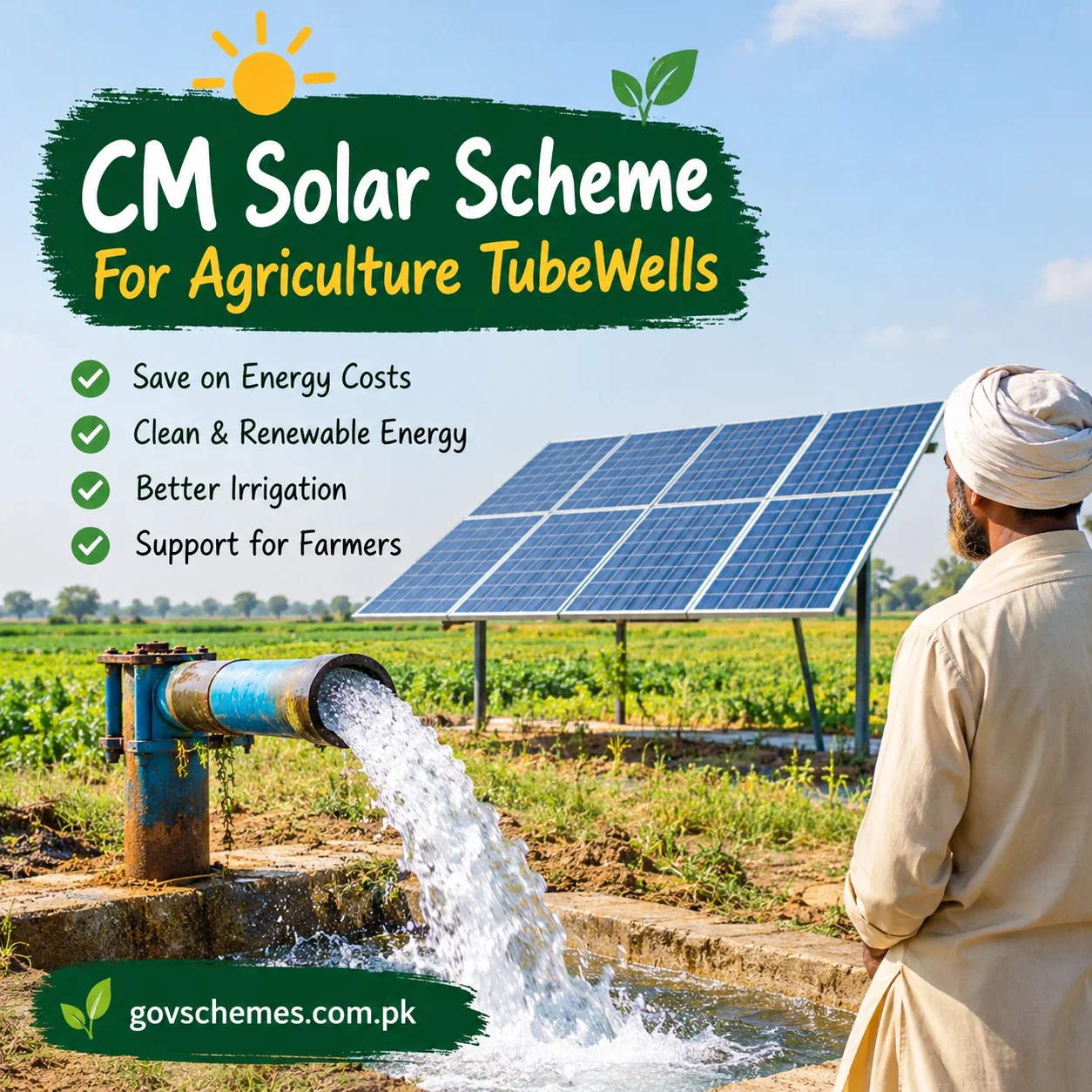
The CM Solar Scheme for Agriculture Tube Wells is the best opportunity for farmers in Punjab who have long struggled with the high cost of running agricultural tube wells. Electricity bills keep rising. Diesel prices keep climbing. Every time crops need water, it feels like burning money. The solar tube well scheme is designed to solve this problem.
According to the facts and figures, you can apply online for this program and get unlimited benefits. I have mentioned all the details about the CM Solar Scheme 2026 in the article below. In addition, you can ask me in the comment box. Hope you will get your Solar panel as soon as possible after applying for the program.
Latest Progress on the CM Solar Scheme For Agriculture
Punjab Chief Minister Maryam Nawaz has officially approved the Agricultural Tube Well Solarization Project. This is not just talk; it is an active, moving initiative.
Under the latest plan, farmers who own 25 acres of land are eligible to apply. They only need to pay 33% of the total project cost. The government covers the remaining 67%.
The first phase will convert 7,000 tubewells to solar energy. A second phase will add 10,000 more diesel tubewells with federal government support.

How Much Can Farmers Save?
The savings are dramatic. According to official figures:
| Power Source | Cost per Acre |
|---|---|
| Diesel | Rs. 3,000 |
| Electricity | Rs. 1,500 |
| Solar | Rs. 50 |
Running a tubewell on diesel costs Rs. 3,000 per acre. Electricity costs Rs. 1,500. Solar energy brings that down to just Rs. 50 per acre.
This is not a small difference. For a farmer irrigating multiple acres, the monthly savings can reach hundreds of thousands of rupees.
Who Can Apply?
To qualify, farmers need to meet these basic conditions:
Residency: Must be a Punjab resident with a valid CNIC.
Land Ownership: Must own agricultural land. The current policy specifies 25 acres as the minimum for eligibility.
Tubewell Requirement: Must have an existing electric or diesel tubewell.
Water Table: Groundwater depth should not exceed 60 feet.
Electric Connection: For electric tubewells, a three-phase connection is required.
Payment Record: No outstanding electricity bills. Defaulters will not be considered.
Documents
Prepare these documents before applying:
- Valid CNIC
- NADRA Family Registration Certificate
- Land ownership proof
- Last paid electricity bill
- Tubewell connection and installation details
How to Apply for the CM Solar Scheme For Agriculture?
Visit the official application portal. The portal may show that applications are closed at certain times. However, given that the project is actively moving forward and Phase 1 aims for completion by June, new application windows are likely to open.
What you should do:
- Check the Punjab Agriculture Department website regularly
- Watch for official announcements about new application phases
- Prepare all documents in advance so you can submit immediately
- Never trust anyone who claims they can “guarantee” your selection
The Scale of Interest
This scheme has generated enormous interest. According to official sources, over 530,000 farmers applied for the solar tubewell program. Of those, 385,000 were found eligible for the balloting process. This tells you two things. First, the demand is huge. Second, not everyone who applies will get selected; the selection process uses balloting.
Latest Eligibility Criteria
Check the criteria below
Land Requirement
You must own at least 25 acres of agricultural land in Punjab.
Residency
You must be a permanent resident of Punjab.
Existing Tubewell
You must already have a working tubewell on your land.
Water Table
The groundwater depth at your farm should not be more than 60 feet.
Farmer’s Share
You will pay only 33% of the total project cost. The government covers the rest
About the Selection Process
How are farmers selected?
Because so many farmers apply, the government uses a computerized balloting system to select beneficiaries. It is not based on who applies first.
How many farmers applied?
Over 530,000 farmers applied, and 385,000 were declared eligible for the balloting process. This shows the demand is extremely high.
Can I check my balloting result?
Yes, if the official portal is active, you can check your status using your CNIC or application number. Results may also be sent via SMS
About the System and Installation
What size system will I get?
The system size depends on your tubewell’s power requirement. Common sizes are 10 kW, 15 kW, and 20 kW.
Who installs the system?
After selection, the farmer chooses a vendor from their district to install the solar system. The work should be done by pre-qualified companies.
How long do solar panels last?
Solar panels typically last 25 years or more with proper maintenance. Inverters may need replacement after 8-10 years
Real Results So Far
The program is not just promises. Official data shows that 7,100 agricultural tube wells have already been solarized. The Phase 1 target of 7,000 tube wells was set for completion by June, and progress is on track.
Verify current eligibility. Early versions of the scheme mentioned 1 acre as the minimum. The latest policy specifies 25 acres. Always confirm which rules are currently in effect. Visit Govtschemes for more details.
Frequently Asked Questions
Is the solar tubewell completely free?
No. The government provides a subsidy, but farmers pay a share. Under the latest policy, farmers pay about 33% of the total cost.
Can I apply right now?
Check the official portal. Application windows open and close in phases. The portal will show whether a new phase is currently accepting applications.
Can farmers from other provinces apply?
No. This is a Punjab-specific program. Other provinces have their own agriculture department initiatives.
Does the solar system need maintenance?
Yes. Solar panels need occasional cleaning. Electrical equipment needs inspection. Ask about warranty terms and maintenance arrangements before installation.
The Bottom Line
CM Solar Scheme for Agriculture Tube Wells. The solar tubewell scheme is a genuine opportunity for Punjab farmers. Irrigation costs are one of the biggest drains on farm income. Solarization can cut that cost dramatically. The key is to use official channels, prepare your documents early, and stay alert for new application phases. The demand is high, but so is the government’s commitment to making this work.
